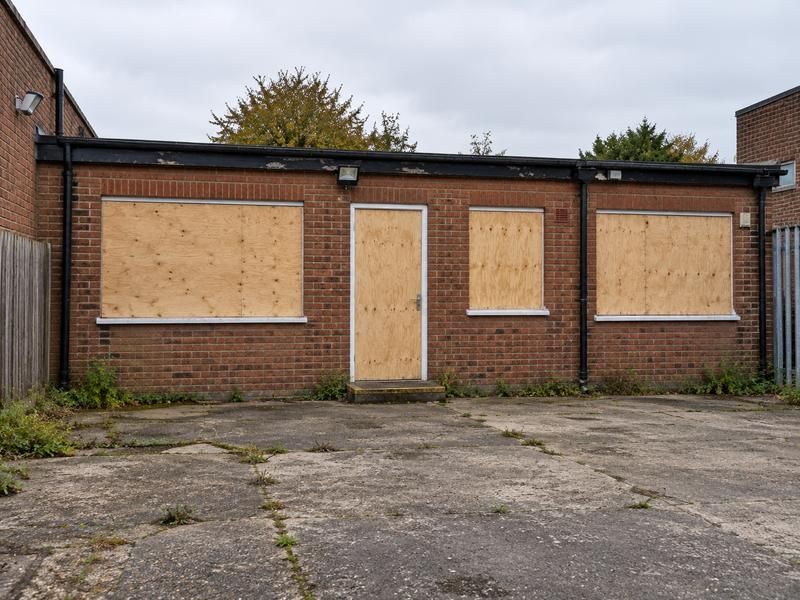
Why an empty building needs more care
An occupied building looks after itself in small ways. Somebody notices the back door has not latched, hears glass break or spots a drip under the sink. Take the people away and those small problems go unseen until they are large ones.
Empty buildings also give themselves away. Post piles up, the garden grows, the lights never change. Once one window is broken and left, more damage tends to follow, because it tells passers-by that nobody is watching.
So securing an empty property is partly about locks and boards, and partly about noticing things early. The steps below apply to a house between tenants, a home waiting for probate or sale, a closed shop or pub and a commercial unit between occupiers.
Walk round and find the weak points
Start outside and go all the way round. People who break in prefer the side nobody can see, so pay most attention to the back and to any side passage. Try every door and window by hand. A window that looks shut may not be locked, and a door can feel firm at the handle yet be loose in its frame.
Look for the easy ways up. A flat roof, an extension, a wheelie bin by a fence or a ladder left in the garden can turn an upstairs window into a way in. Check side gates, sheds, garages, cellar hatches and any rooflights as well.
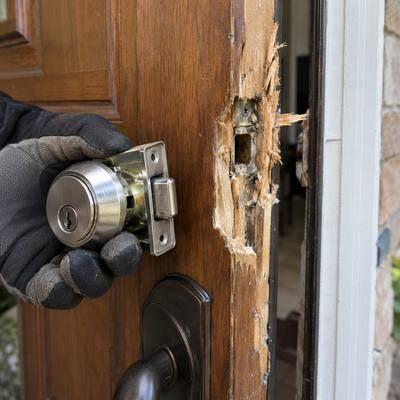
Then note what is already damaged. A cracked pane, a split door frame or a lock that sticks is a weakness now and will only get worse. Have forced or damaged doors and frames dealt with through burglary repairs before the building is left, and take photos of everything as you find it.
Got an empty building to secure?
Send photos of each side and the postcode, or call us at any time. We will quote before any boards go up.
Clear it out and make the inside safe
Take away anything that makes the building worth entering. That means valuables and electrical goods in a house, and stock, tills, tools and equipment in a shop or unit. If a room is plainly bare, there is less reason to go further.
Remove or lock up things that help a break-in, such as ladders, garden tools and loose bricks or slabs. Empty the bins and clear rubbish from inside and around the building, since piles of waste are a fire risk and draw attention.
Think about water, gas and electricity. A leak in an empty building can run for a long time before anyone finds it. Many owners turn off the water at the stopcock and switch off what is not needed, but heating, alarms and frost protection may depend on a supply staying on. Your insurer may have a view on this, so ask before you decide.
Seal or cover the letterbox if post is no longer needed, and arrange for mail to be redirected or collected. Keep a record of who holds keys, and get back any that are no longer needed.
Keep it looking cared for
A building that looks used is less likely to be tried. Keep grass and hedges cut, sweep up leaves and litter and take bins in. A lamp on a timer in a house, or working outside lights on a commercial unit, helps after dark.
Ask a neighbour or the business next door to keep an eye out, and give them a number to ring. People are generally glad to help, since an empty building that goes downhill affects them too.
Most of all, visit. Go at different times, walk right round the outside and go into every room. Check for signs of entry, water, pests and damage, and write down the day and what you found. Deal with anything broken straight away, because quick repairs are the clearest sign that someone is in charge of the place.
When boarding is the right step
Locks and visits are enough for many short gaps. Boarding earns its place when the building will be empty for a long spell, when it sits somewhere quiet and unseen, when glass has already been broken or when someone has already been inside.
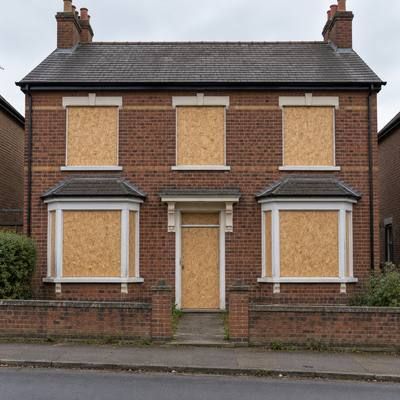
Vacant property boarding covers the windows and doors that could be reached with sheet timber cut on site to fit each opening. On a house that usually means the ground floor plus any upper windows above a flat roof or extension. One door is left for you, your agent or your contractors to use.
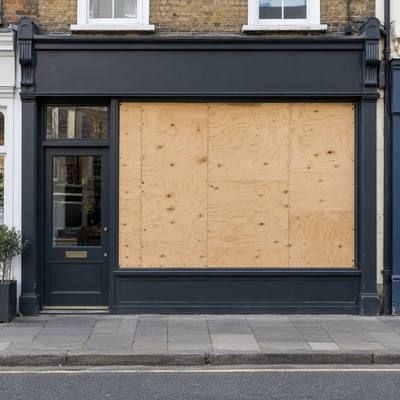
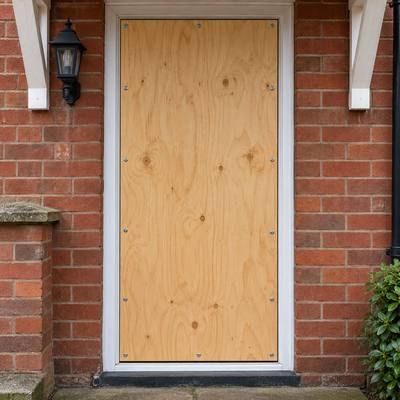
Doors deserve their own thought, because a weak or already damaged door is the quickest way in. Door boarding closes off the ones you do not need. A closed shop or pub has a different problem: large panes that are costly to replace and tempting to break. Shopfront boarding covers them so the glass behind is shielded as well as the unit.
Boards change how a building looks, and on some streets you may prefer to board only the back and sides. That is a fair choice to talk through. Our guide to what boarding up involves explains how boards are fitted and what they are like to live with.
Tell your insurer and keep records
Insurance policies often have conditions for buildings that are unoccupied. They may ask for particular precautions or for inspections, and they vary a good deal. Tell your insurer the building is empty, ask what they expect of you and get the answer in writing if you can.
Then keep a simple log. Photos of each side of the building once it has been secured, notes from each visit and invoices for any boarding or repairs all show that you have looked after it. If the property belongs to an estate, a company or a client, share that record with whoever is responsible.
If the building is listed, shared with other owners or held on a lease, check whether you need anyone's agreement before fixing boards to it.
If someone does get in
If you arrive and find a door forced or a window broken, do not go in if there is any chance someone is still inside. Step away and call the police. Once it is safe, photograph the damage before anything is moved, report it and ask for a crime reference number.
Get the opening closed the same day if you can, since an open building rarely stays untouched for long. Then let your insurer know, and look again at the rest of the building. A break-in is often the point at which an owner decides to board more of it than before.