Check it is safe, then call the police
If you arrive to find a door forced or a window broken, do not walk straight in. Where there is any chance someone is still inside, stay out, move away and call 999. If the intruder has clearly gone, report it on the police non-emergency number or online.
Ask for a crime reference number and keep it somewhere you will find it again. Your insurer is likely to want it, and so may your landlord or managing agent.
Ask whether the police intend to send someone to examine the scene. If they do, touch as little as you can until they have been, and mention it to anyone you call about repairs so the visits do not clash.
Record the damage before you tidy
The urge to clear up is strong, but a few minutes with a phone camera comes first. Photograph the point of entry from both sides, then every damaged door, frame, lock and window. Take pictures of each room that has been disturbed, even if nothing obvious is missing.
Start a list of what has gone and add to it over the next few days, because some losses only come to light later. Receipts, serial numbers and old photos of valuable items all help to show what you owned.
Check for missing keys, bank cards, passports and paperwork with your details on it. Contact your bank about any cards straight away. If car keys have gone, move the vehicle somewhere secure if you can and tell your motor insurer.
Door or window forced?
Send us a photo and your postcode, or call at any hour. We will tell you what is needed and quote before work starts.
Close the way in the same day
A building that has been entered once stays exposed until the opening is properly shut. A chair wedged against a broken door or a sheet of cardboard taped across a window will not stop anybody who wants to come back.
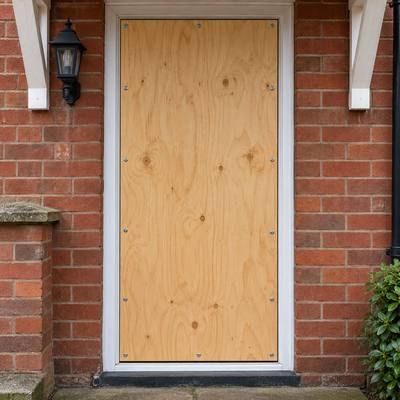
Where a door will no longer shut or lock, door boarding is the usual answer. Sheet timber is cut on site and fixed across the doorway or over the damaged part of the door, so the building can be locked up. If the forced door is your only way in and out, tell us when you call so we can plan around it.
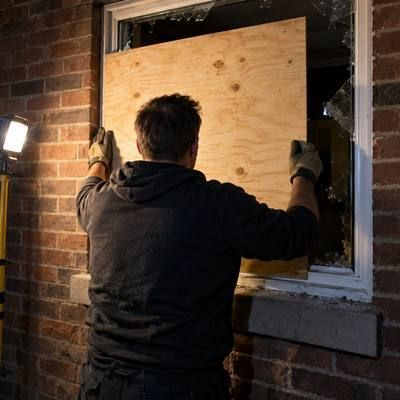
Smashed windows are covered in much the same way. Our emergency boarding up page explains how it works, and the phones are answered 24 hours a day, every day. We give you a quote before work starts, usually from a photo and a postcode.
Broken glass is cleared and taken away as part of the visit. Until then, keep children and pets out of the affected rooms, wear shoes indoors and stay clear of any glass still hanging in a frame.
Put doors, frames and locks right
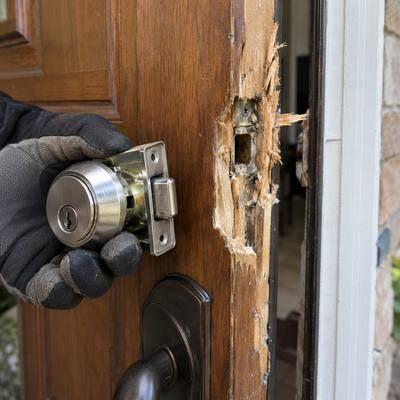
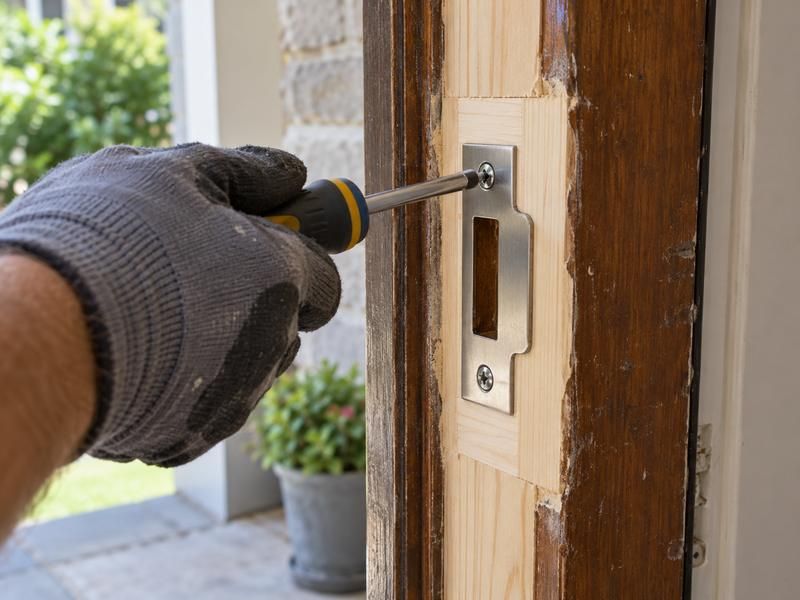
A forced door rarely suffers in one place only. The frame often splits where the lock engages, hinges can be pulled out of line and the edge of the door itself may be splintered. Fitting a new lock into a split frame leaves a weak point exactly where the last attempt succeeded.
This is the work covered by burglary repairs: the door, the frame around it, the lock and any glass are looked at together so the whole entrance is sound again. Send us photos of the door edge and the frame as well as the lock, and we will tell you what we think is needed.
If any keys were taken, or you cannot account for every set, have the locks changed. That includes keys kept on a hook by the door or in a kitchen drawer. Think about the garage, the shed and any side gate too, as they are easy to forget once the main door is fixed.
Replace the broken glass
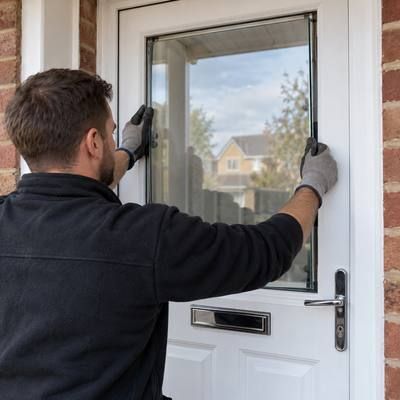
A glazed panel beside the lock is a common way in. Once the door is secure, the panel needs replacing, and our door glass replacement page covers front, back and patio doors.
Safety glass is expected in doors and in glazing close to the floor. Toughened panels and sealed double glazed units have to be manufactured for the opening, which means measuring up on the first visit and fitting on a second one. The board stays in place until the new glass arrives.
It is worth asking about laminated glass at this point. Laminated glass holds together when broken, so the panel stays in its frame instead of leaving a gap. Whether it suits your door depends on the frame, so send us a photo and we will tell you.
Deal with your insurer
Tell your insurer promptly, and have the crime reference number ready when you do. Policies differ, so read your own to see what is covered, what excess applies and whether they want to approve work beforehand.
Keep hold of damaged items until your insurer says you may dispose of them. Keep your photos, your list of what is missing and every invoice. We provide photos of the damage and of the completed work with an itemised invoice, which you can pass straight on.
If you rent, tell your landlord or agent as soon as you can. The building and your own belongings are often insured under separate policies held by different people, so you may each need to contact your own insurer.
Before you leave or go to bed
Walk round the whole property once the repairs or boards are in place. Shut and lock every door and window, including the ones that were not touched. Take keys out of locks and away from letterboxes and glazed panels.
Put ladders, tools and garden furniture away, since anything left outside can be used to reach or force a window. Leave a light on if the property will be empty, and let a neighbour you trust know what has happened so they can keep an eye out.
It is normal to feel unsettled after a break-in, at home or at work. Getting the building properly closed up on the first day, and the lasting repairs booked, is the practical part you can control.