How the two types are made
Toughened glass starts as an ordinary pane that has already been cut to its final size and shape. It is then heated and cooled quickly, which locks tension into the sheet. The result is a pane that is stronger than ordinary glass of the same thickness and that fails in a very particular way.
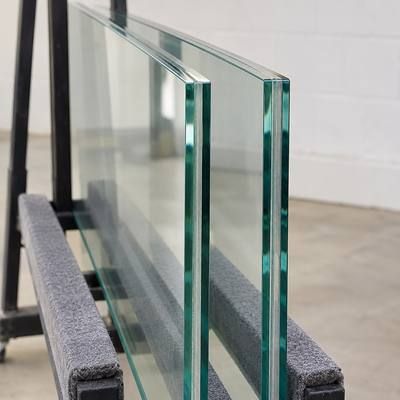
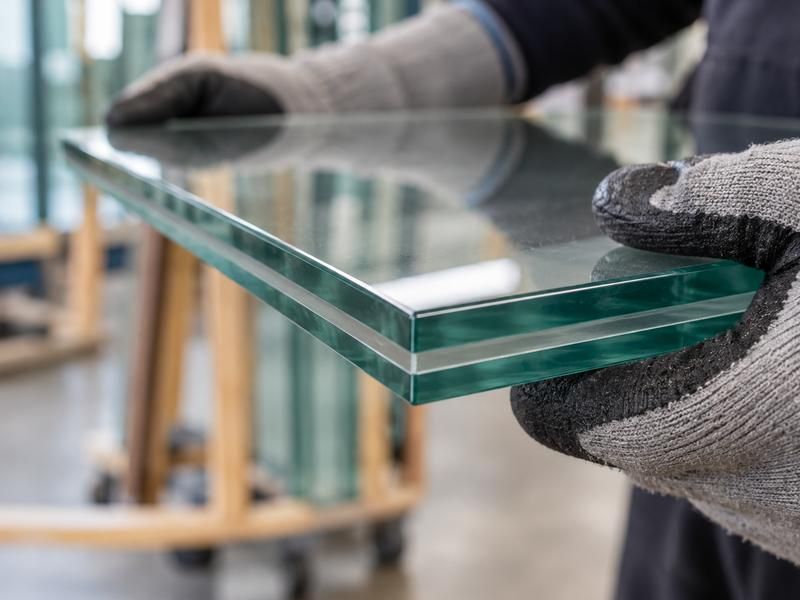
Laminated glass is a sandwich. Two sheets of glass are bonded to a clear layer between them, and that layer is what does the work. You can sometimes see it as a fine line if you look at the edge of the pane.
The difference in how they are made explains nearly everything else: how each one breaks, where each one is used and how quickly a replacement can be fitted.
What happens when each one breaks
When toughened glass fails, the whole pane goes at once. It crumbles into small blunt pieces instead of long sharp shards, so somebody who falls against it is far less likely to be badly cut. The drawback is that nothing is left in the frame. The opening is empty and needs covering straight away.
Laminated glass behaves the other way round. It cracks, often in a spider's web pattern, but the pieces stay stuck to the layer in the middle. The pane normally remains in its frame, still keeping out the weather and still in the way of anyone trying to get through.
Neither should be left broken. A cracked laminated pane has lost much of its strength and will not look right, and a toughened pane that has gone leaves a hole. Our emergency glazing service deals with both, and the opening is always made secure first.
Not sure which glass you need?
Send us a photo of the pane and your postcode, or give us a call. We will tell you what it looks like and quote before any work starts.
Where safety glass is expected
Some positions carry a higher risk of someone walking into, falling against or putting a hand through the glass. Safety glass is expected in doors, in the panels beside doors and in glazing close to the floor. Bathrooms and stairways are other places where it is commonly used.
Older properties often still have ordinary glass in these spots, because it was fitted before safety glass became the norm. When one of those panes breaks, replace it with safety glass even though the original was not. Our toughened and laminated safety glass page explains what we supply and fit.
The exact requirements depend on the position and size of the pane and on the type of building. If you are not sure whether a particular window counts, send us a photo and we will tell you.
Choosing for a home
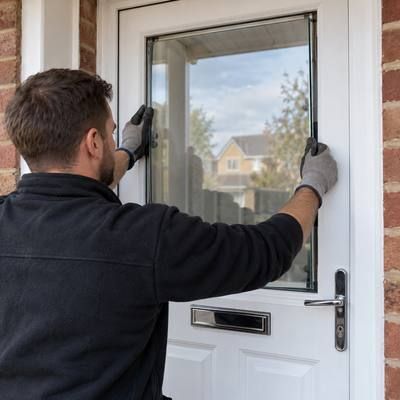
For most doors, side panels and low windows in a house, toughened glass is the usual choice. The main concern in those places is a person being hurt, and toughened glass answers that well.
Laminated glass is worth thinking about where security matters too. A glazed panel next to a lock, a back door out of sight of the street or a ground-floor window beside a flat roof are typical examples. Because the pane holds together, breaking it does not leave an instant gap to reach or climb through.
Laminated glass also suits places where falling glass would be the hazard, such as glazing overhead, since the broken pane tends to stay put instead of dropping. For front, back and patio doors, see door glass replacement, which also covers patterned obscure glass.
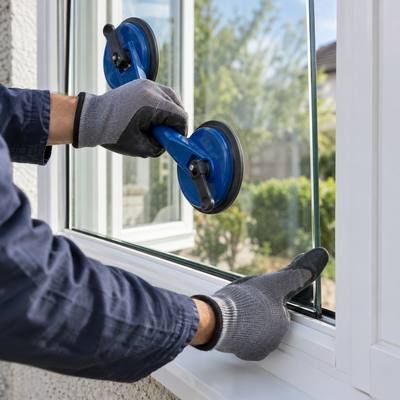
Double glazed units can be made with either type, and with a different type on each face. If a sealed unit in a door or low window has broken, the replacement unit is normally built with safety glass.
Choosing for a shop or business
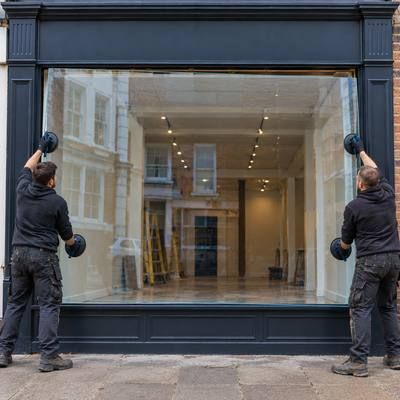
Commercial glazing has to cope with more people, larger panes and a greater chance of deliberate damage. Laminated glass is a common choice for shopfronts for that reason. A pane that cracks but stays in place means the premises are still closed off overnight, even though the glass will need replacing.
Toughened glass is widely used as well, particularly in doors that open and close all day and in frameless glass entrances. Some fronts combine the two, and thicker laminated glass is available where the risk is higher.
If you are replacing a pane after an attack, it is a good moment to ask whether the same glass should go back. Insurers and landlords sometimes specify what a shopfront must be glazed with, so check your policy and your lease before you order. Our shopfront glass replacement page covers large panes and shop doors.
How to tell which glass you have
Safety glass normally carries a small permanent mark in one corner. It can be faint, so look closely at all four corners from both sides. If you find one, a clear photo of it is the most useful thing you can send.
If the pane has already broken, the way it broke is a strong clue. A frame emptied into a pile of small cube-like pieces points to toughened glass. A pane that is crazed but still hanging together points to laminated. Long, sharp, dagger-shaped pieces suggest ordinary glass, which should be handled with great care.
Do not tap, flex or lean on a damaged pane to find out. Keep people and pets away, photograph it from a safe distance and let whoever comes to repair it confirm what it is.
What the choice means for fitting
Because toughened glass is finished at the factory, it is made to size and cannot be cut on site afterwards. Any holes, notches or shaped corners have to be formed before it is toughened as well. That is why a broken toughened pane means two visits: the first to measure and make the opening secure, the second to fit the new glass.
Laminated glass does not go through that heat treatment, so the wait can be different, though large or unusual panes are still ordered in. Either way, we give you a quote before work starts, usually from a photo and a postcode, and tell you what has to be made.